
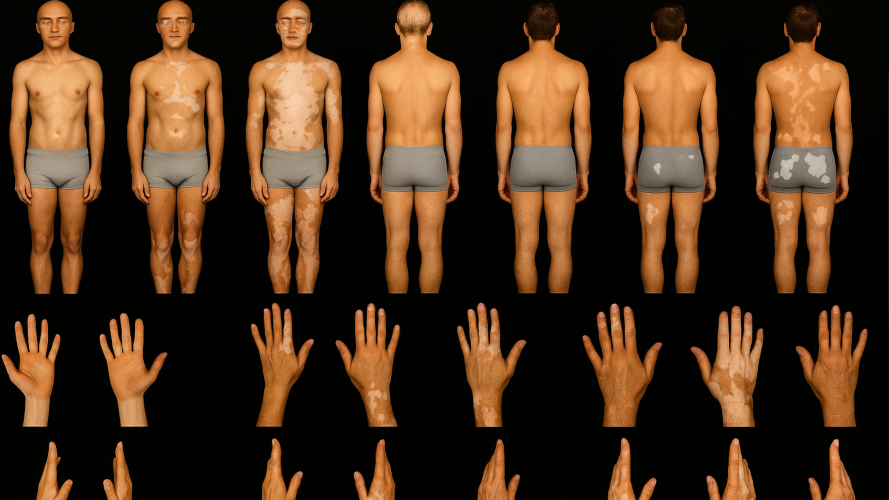
Patient-Reported Outcomes in Vitiligo: QoL Scales, Minimal Important Change, and Clinic Integration
Key Takeaways Why measure QoL? VASI captures extent, but not impact (stigma, avoidance, mood). PROMs close that gap. Core tools: […]
Key Takeaways Why measure QoL? VASI captures extent, but not impact (stigma, avoidance, mood). PROMs close that gap. Core tools: […]
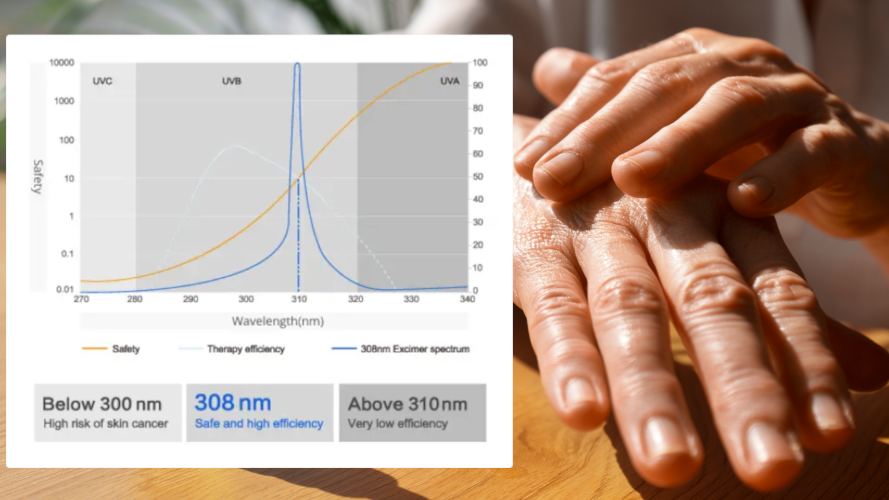
Key Takeaways Backbone: NB-UVB 311 nm for generalized disease; excimer 308 nm for focal patches, rims, and acral borders. Face/folds: tacrolimus (±
Key Takeaways Indication: stable segmental or focal nonsegmental vitiligo that failed optimized medical/light therapy. Confirm stability: no new/enlarging lesions, quiet
Key Takeaways Wood’s lamp: vitiligo shows bright chalk/blue-white accentuation with sharp borders; low-contrast off-white or coppery/yellow fluorescence suggests alternatives. Dermoscopy:
Key Takeaways Autoimmune thyroid disease is the most frequent association; start with TSH and consider TPOAb in symptomatic or high-risk
Key Takeaways Why relapse? Persistent tissue-resident memory T cells (TRM) linger in previously affected skin and can reignite depigmentation after
Key Takeaways Face/neck first-line: topical calcineurin inhibitors (tacrolimus 0.03–0.1%) are preferred to avoid steroid atrophy. Generalized disease: NB-UVB 311 nm 2–3×/wk
Key Takeaways Segmental vitiligo (SV): early onset, unilateral/dermatomal streaks, rapid stabilization (months), poor response to light on acral—but excellent surgical
Key Takeaways Wood’s lamp makes vitiligo borders chalk/blue-white with high contrast; confetti-like micro-macules at the rim suggest activity. Dermoscopy shows